
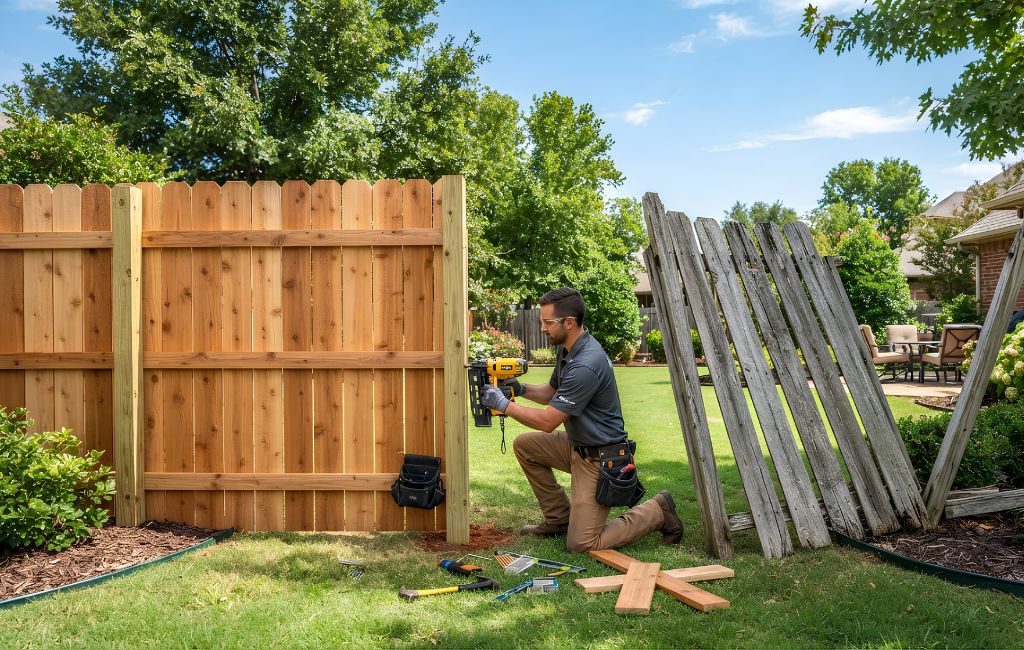
A backyard fence rarely fails all at once. Small issues build up over months of Oklahoma wind, sun, and sudden temperature swings until a single storm finally exposes the damage. Fence repair in Edmond OK often becomes urgent only after leaning posts, splitting boards, or rusted hardware have already weakened the structure, which is why catching problems early makes such a difference in cost and effort.
Common Signs a Fence Needs Attention
Homeowners in Edmond typically notice fence trouble through a handful of recurring warning signs. Recognizing these early can prevent a minor fix from turning into a full replacement project.
- Leaning or wobbling sections, often caused by loosened or rotted posts
- Visible cracks, splinters, or warping in wood panels
- Rust stains or bending on metal fencing components
- Gaps at the base where soil has eroded or shifted
- Gates that stick, sag, or no longer latch properly
Each of these issues points to a different underlying cause, and identifying the right one is the first step toward an effective repair.
Why Oklahoma Weather Accelerates Fence Damage
Temperature and Moisture Swings
Central Oklahoma experiences frequent shifts between wet and dry conditions, which causes wood to expand and contract repeatedly. Over time, this cycle loosens fasteners, warps boards, and weakens joints at a faster rate than in more stable climates.
Wind Exposure
Edmond’s open landscape and seasonal storms put consistent lateral pressure on fence panels. Taller privacy fences, in particular, act like sails during high winds, which explains why leaning posts are such a common repair request in the area.
Soil Composition
Much of the region sits on clay-heavy soil that expands when wet and contracts when dry. This movement gradually shifts buried fence posts out of alignment, even when the visible portion of the fence still looks intact.
Repair Options for Different Fence Materials
Wood Fences
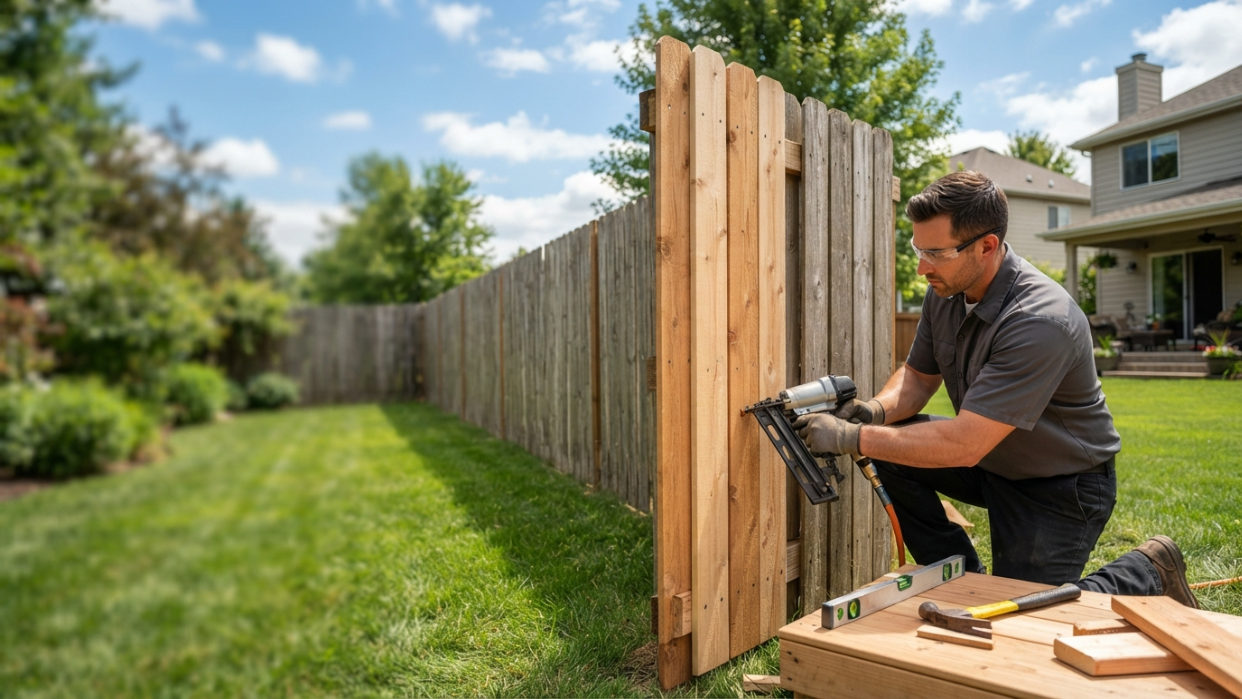
Wood repairs usually involve replacing individual rotted boards, reinforcing loose posts with concrete, or sanding and resealing surfaces that have started to gray or splinter. Spot repairs are often sufficient if the damage hasn’t spread to the majority of the fence line.
Vinyl Fences
Vinyl panels tend to crack rather than rot, especially after impact from falling branches or extreme cold snaps. Replacing a single cracked panel is generally straightforward, since most vinyl systems are designed with interlocking sections.
Metal and Chain-Link Fences
Rust is the primary concern with metal fencing. Small rust spots can be treated with wire brushing and rust-inhibiting paint, while more advanced corrosion may require replacing damaged sections of railing or mesh entirely.
DIY Repairs Versus Professional Help
Minor fixes, such as tightening hardware or replacing a single board, are within reach for many homeowners with basic tools. However, certain situations call for more experienced hands:
- Multiple leaning posts along the same fence line
- Structural damage after severe storms
- Fences on shared or disputed property lines
- Large-scale rot affecting several panels at once
Attempting extensive repairs without proper equipment can sometimes cause more harm than good, particularly when it comes to resetting posts in Oklahoma’s dense clay soil.
Cost Factors to Keep in Mind
Repair costs vary based on the material, the extent of the damage, and how much of the fence needs attention. A single board replacement is far less costly than resetting posts or repairing damage along an entire fence line. Labor costs in the Edmond area also fluctuate depending on the season, with spring and early summer typically seeing higher demand due to storm-related repairs.
Simple Maintenance Habits That Extend Fence Life
Routine care goes a long way toward preventing repeat damage. A few habits worth adopting include:
- Inspecting posts and hardware twice a year, ideally before and after winter
- Trimming vegetation that traps moisture against wood surfaces
- Resealing wood fences every two to three years
- Clearing debris from the base of the fence after storms
These small steps reduce the likelihood of major repairs down the road and help fences hold up better against the region’s unpredictable weather.
Frequently Asked Questions
- How often should a fence be inspected in Edmond OK? Twice yearly inspections, particularly before and after winter, help catch early signs of wear.
- Can a leaning fence post be fixed without full replacement? Yes, many leaning posts can be reset and reinforced with fresh concrete if the wood itself isn’t rotted.
- Is vinyl fencing more resistant to weather damage than wood? Vinyl resists rot and moisture better than wood, though it can crack under strong impact or extreme cold.
- How long does a typical fence repair take? Minor repairs often take a few hours, while post replacement or larger sections may require a full day or more.
Final Thoughts
Fences take on constant exposure to Oklahoma’s shifting weather, and small issues rarely stay small for long. Paying attention to early warning signs, understanding how local conditions affect different materials, and keeping up with routine maintenance are the most reliable ways to keep a fence standing strong for years to come.